
- November 30, 2024
- Posted by: sibservices
- Category:
Who is a Bouncer Security?
Bouncer security involves the role of personnel, commonly referred to as bouncers, who are responsible for maintaining order and ensuring the safety of patrons in venues like bars, nightclubs, and other entertainment establishments.
Their primary duties include managing entry, monitoring crowd behaviour, and intervening in conflicts to protect both patrons and staff.
What are the key responsibilities of a bouncer?
Bouncers play a crucial role in maintaining safety and order in nightlife venues such as bars and nightclubs. Their key responsibilities encompass a range of duties aimed at ensuring a secure environment for patrons and staff.
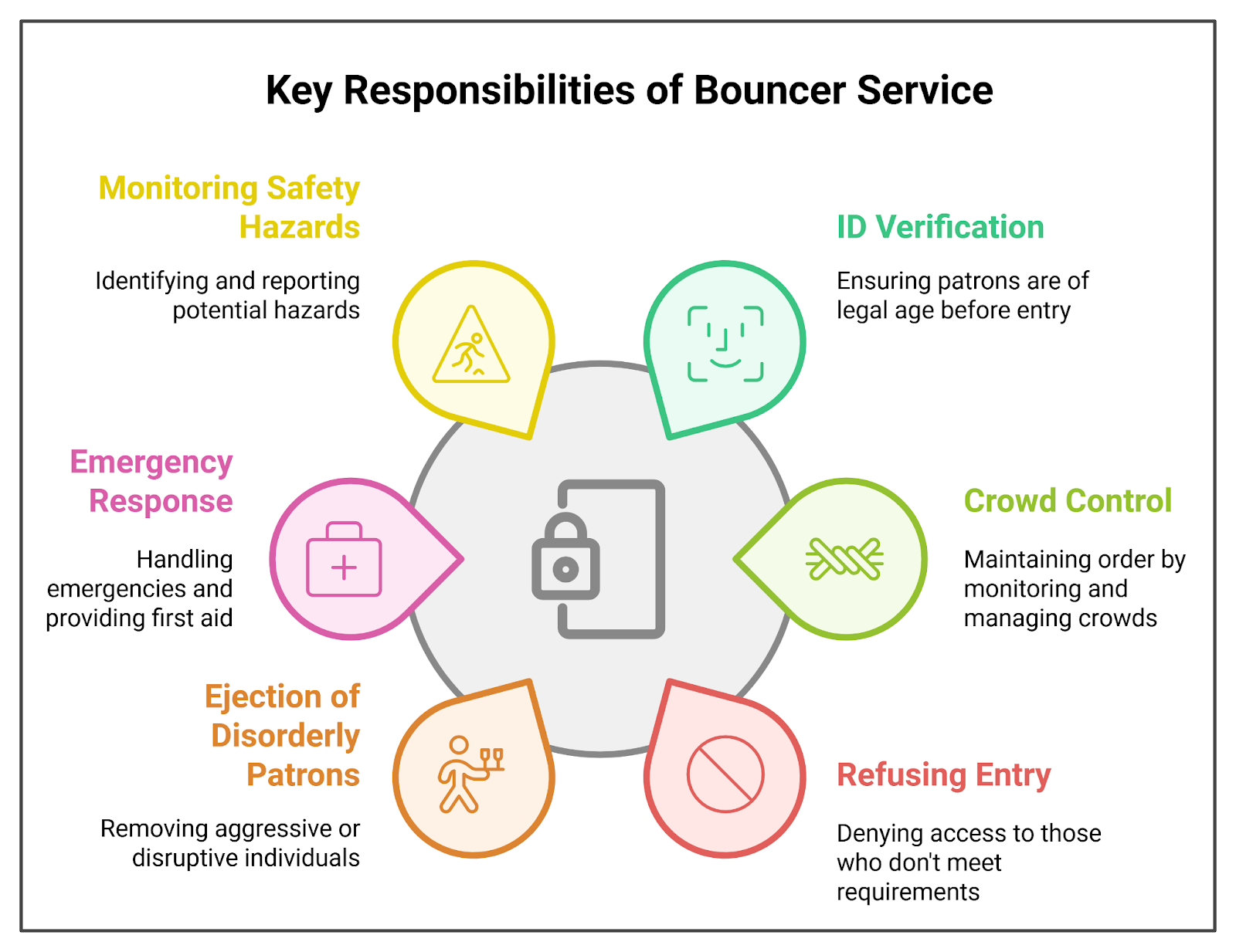
Here are the primary responsibilities of a bouncer:
-
ID Verification
Bouncers check patrons’ identification to ensure they are of legal drinking age before allowing entry into the venue.
-
Crowd Control
They monitor the crowd to maintain order, addressing any disruptive behavior or conflicts that may arise.
-
Refusing Entry
Bouncers have the authority to deny entry to intoxicated individuals or those who do not meet the venue’s entry requirements.
-
Ejection of Disorderly Patrons
If a patron becomes aggressive or excessively disruptive, bouncers are responsible for asking them to leave the premises.
-
Emergency Response
They are trained to handle emergencies, which may include calling law enforcement or providing first aid in case of injuries.
-
Monitoring Safety Hazards
Bouncers keep an eye out for potential safety hazards within the venue and report these to management.
-
Communication with Staff
They serve as a link between patrons and venue management, communicating any incidents or concerns that arise during their shift.
-
Promoting Venue Image
Bouncers are expected to act professionally and courteously, contributing positively to the club’s atmosphere while enforcing rules.
-
Record Keeping
Maintaining documentation related to incidents, patron behavior, and other relevant activities is also part of their responsibilities.
What is the difference between a bodyguard and a bouncer?
The differences between a bodyguard and a bouncer are significant, as each role serves distinct purposes and operates in different environments. Here’s a breakdown of their key differences:
| Aspect | Bodyguard | Bouncer |
| Primary Role | Personal protection of individuals (e.g., celebrities, politicians) | Maintaining order in nightlife venues (e.g., bars, nightclubs) |
| Work Environment | Various settings, including public events and private gatherings | Specific to nightlife environments with alcohol service |
| Training and Skills | Extensive training in personal protection, threat assessment, and emergency response | Training focused on crowd control, conflict resolution, and physical restraint |
| Use of Force | Uses force only when necessary to protect clients; strategic approach | May use physical force frequently to manage disruptive patrons |
| Employment Structure | Often self-employed or working for specialized security firms | Typically hired directly by venue owners or management |
| Professional Appearance | Maintains a professional appearance reflecting their protective role | May adopt a casual or intimidating appearance suited to nightlife |
What factors should you consider when selecting a bouncer service for your event or venue?
Selecting a bouncer service is crucial for ensuring safety and maintaining order at events, particularly in venues like hotels, pubs, and clubs.
Here are key considerations to help you make an informed choice:
1. Define Your Needs
- Event Type: Understand the nature of your event (e.g., wedding, club night) and the specific security requirements it entails.
- Venue Size: Consider the size of the venue and the expected number of attendees to determine how many bouncers you may need.
2. Assess Qualifications and Experience
- Licensing: Ensure that the bouncer service is licensed to operate in your area complying with local regulations.
- Experience: Look for a service with a proven track record in handling similar events. Experience in managing crowd control and emergency situations is vital.
3. Evaluate Communication Skills
- Interpersonal Skills: Bouncers should possess strong communication skills to effectively manage conflicts and interact with guests. Their ability to de-escalate situations is crucial for maintaining a safe environment.
4. Physical Presence and Training
- Physical Attributes: A strong physical presence can deter potential troublemakers. Bouncers should be fit and capable of handling physical confrontations if necessary.
- Training: Inquire about the training programs that bouncers undergo. They should be trained in conflict resolution, emergency response, and first aid.
5. Technology and Equipment
- Use of Technology: Check if the service employs modern security technology (e.g., surveillance cameras, and communication devices) to enhance safety measures during events.
6. Reputation and References
- Client Testimonials: Look for reviews or ask for references from previous clients to gauge the reliability and effectiveness of the bouncer service.
- Market Reputation: A well-established reputation in the industry can be a good indicator of quality service.
7. Customer Service Orientation
- Responsiveness: Evaluate how responsive the bouncer service is to inquiries and concerns. Good customer service is essential for effective communication before and during your event.
8. Pricing Structure
- Transparent Pricing: Review the pricing structure carefully. Ensure that all fees are clearly outlined in a contract to avoid misunderstandings later on.
9. Trial Period
- Trial Services: If possible, consider hiring the bouncer service on a trial basis for smaller events to assess their performance before committing to larger engagements.
What Are the Benefits of Hiring Professional Bouncer Security Services?
Hiring professional bouncer security services offers numerous advantages for events and venues. Here are the key benefits:
1. Enhanced Safety
Bouncers provide a secure environment by controlling access and managing crowd behavior, reducing the likelihood of incidents.
2. Stress Relief for Organizers
Event hosts can focus on their responsibilities without worrying about security issues, as trained bouncers handle potential problems.
3. Professional Conflict Resolution
Bouncers are skilled in managing disturbances effectively, ensuring quick and appropriate responses to any issues.
4. Improved Guest Experience
Their presence enhances the overall atmosphere, as bouncers often assist with guest services and maintain order.
5. Legal Compliance
Professional security ensures adherence to local laws and safety regulations, minimizing legal risks for event organizers.
6. Crime Deterrence
The visible presence of bouncers discourages criminal activity, contributing to a safer environment for attendees.
7. Emergency Preparedness
Many bouncers are trained in first aid and emergency response, providing crucial assistance during crises.
In summary, hiring professional bouncer security services significantly enhances safety, guest experience, and overall event success. S&IB offers expert Bouncer Security Services to maintain safety and order at your events and venues.