
- November 22, 2024
- Posted by: sibservices
- Category:
What is electronic surveillance?
Electronic surveillance involves monitoring individuals or places using electronic devices.
This can include wiretapping phone calls, bugging rooms with hidden microphones, using video cameras, tracking GPS locations, or monitoring computer activity. It’s often used for law enforcement, national security, or private investigations.
👉 At S&IB, our team of experts provide advanced electronic surveillance solutions, including video surveillance, remote monitoring, and smart security systems, ensuring top-tier safety and efficiency for your spaces.
What are the main methods and technologies in electronic surveillance?
Electronic surveillance encompasses a variety of techniques and technologies that enable the monitoring and collection of information about individuals or groups, often without their knowledge.
Here are some key techniques involved in electronic surveillance:
1. Video Surveillance
This method employs closed-circuit television (CCTV) cameras to monitor and record activities in various environments, such as public spaces, businesses, and homes.
Modern systems often include features like motion detection, night vision, and remote access via mobile devices.
2. Audio Surveillance
Involves intercepting conversations through wiretapping telephone communications and using hidden microphones (bugs). This technique is often employed in law enforcement investigations to gather evidence.
3. Geolocation Tracking
Utilizes GPS technology to track the real-time location of individuals or vehicles. This can involve dedicated GPS tracking devices or data from mobile phones, which provide insights into movement patterns and locations.
4. Internet Monitoring
Involves tracking online activities, including web browsing, social media interactions, and email communications.
This can be done using specialized software that captures digital footprints for security or investigative purposes.
5. Biometric Systems
These systems use unique physical characteristics, such as facial recognition, fingerprint scanning, or iris recognition, to identify individuals. Biometric surveillance is increasingly used for access control in secure facilities and for law enforcement.
6. Artificial Intelligence (AI)
AI technologies enhance surveillance capabilities by analyzing large volumes of data to identify patterns, detect anomalies, and improve image quality.
Machine learning algorithms can help predict potential security threats based on historical data.
7. Cloud-Based Surveillance
This technology allows for the storage and management of surveillance data on cloud servers. Users can access live feeds and recorded footage remotely via secure internet connections, providing flexibility and scalability for surveillance systems.
These methods and technologies are widely utilized across various sectors, including law enforcement, corporate security, and personal safety, while also raising important considerations regarding privacy and ethics.
What are the benefits of electronic surveillance?
Electronic surveillance offers numerous benefits across various sectors, enhancing security, efficiency, and operational oversight.
Here are the key advantages:
1. Crime Prevention
The presence of surveillance cameras deters criminal activity. Potential offenders are less likely to commit crimes when they know they are being watched.
2. Evidence Collection
Surveillance systems provide valuable evidence for law enforcement. Recorded footage can be crucial in investigations and court proceedings, helping to identify and prosecute criminals.
3. Real-Time Monitoring
Electronic surveillance allows for 24/7 monitoring of premises, ensuring that any suspicious activities can be addressed immediately. This capability is essential for both residential and commercial properties.
4. Remote Access
Many modern surveillance systems offer remote access features, enabling users to monitor their properties from anywhere via smartphones or computers. This flexibility enhances security management.
5. Cost-Effectiveness
Installing electronic surveillance can reduce the need for physical security personnel, leading to significant cost savings over time. Advanced systems often require fewer cameras to cover large areas due to improved technology.
6. Enhanced Safety
Surveillance systems help protect individuals within monitored spaces, alerting them to emergencies such as intrusions or fires. This can lead to quicker responses and potentially save lives.
7. Operational Oversight
Businesses can use surveillance to monitor employee activities, ensuring compliance with safety protocols and operational procedures. This oversight can improve productivity and reduce internal theft.
8. Insurance Benefits
Having a surveillance system in place can lower insurance premiums, as insurers recognize that monitored properties are less likely to experience losses due to theft or vandalism.
9. Conflict Resolution
In cases of disputes or incidents, recorded footage can provide clear evidence that helps resolve conflicts effectively, whether they occur in workplaces or public spaces.
What factors to consider when choosing an electronic service?
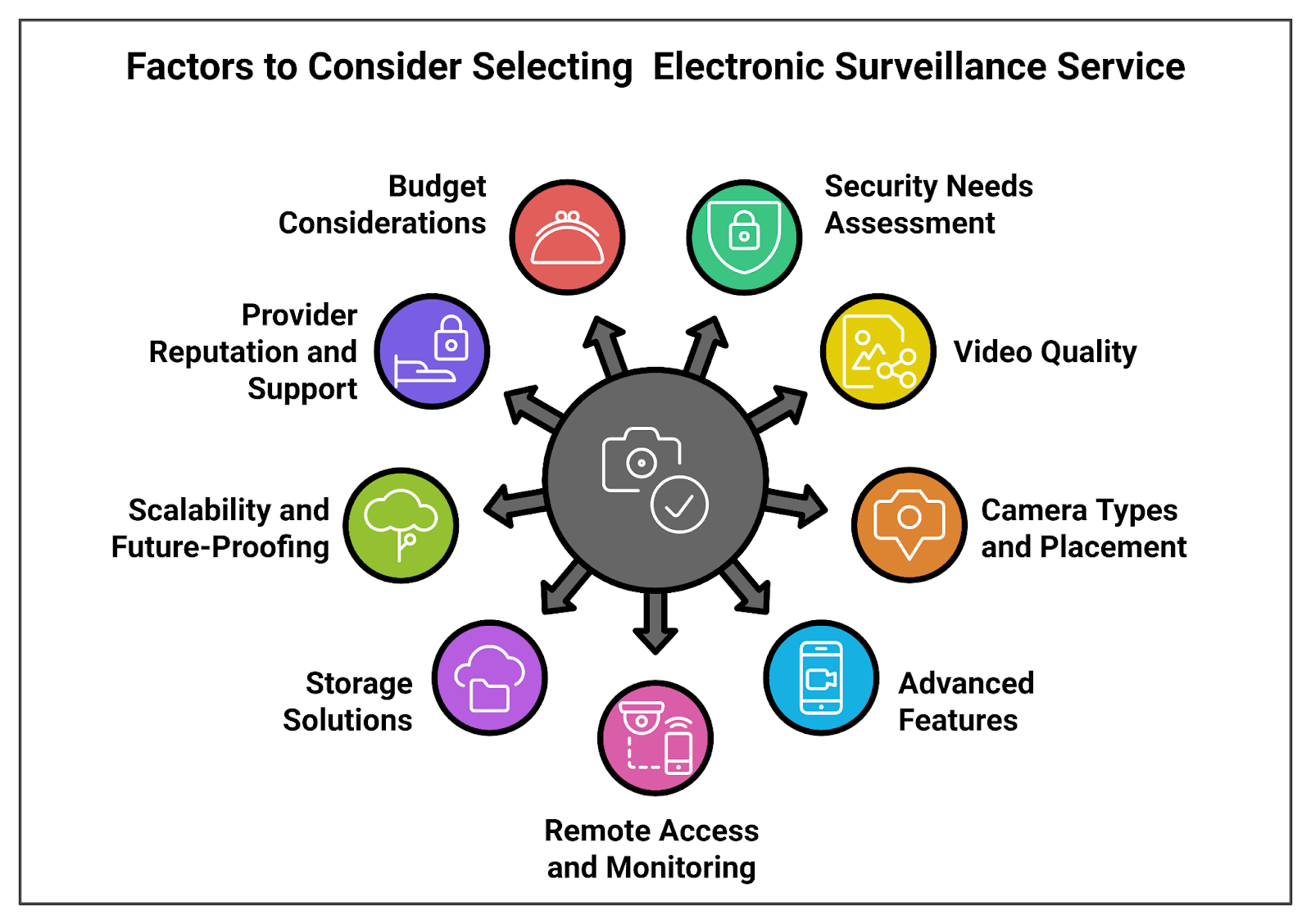
When selecting an electronic surveillance service, several critical factors should guide your decision to ensure optimal security for your property.
Here are the key considerations:
- Security Needs Assessment: Evaluate the specific security requirements of your premises and identify critical areas that need monitoring.
- Video Quality: Choose systems that provide high-resolution video for clear identification and have good low-light performance.
- Camera Types and Placement: Consider various camera types based on your needs and plan strategic placement to cover all angles effectively.
- Advanced Features: Look for systems with motion detection, analytics, and smart technology integration to enhance security.
- Remote Access and Monitoring: Ensure the system allows remote access via mobile devices and consider continuous monitoring services for rapid response.
- Storage Solutions: Decide between cloud-based or local storage options based on your budget and data retention needs.
- Scalability and Future-Proofing: Choose a system that can expand with your needs, allowing for additional cameras or features as required.
- Provider Reputation and Support: Research potential service providers for reliability and ensure they offer strong customer support post-installation.
- Budget Considerations: Set a realistic budget that covers installation, equipment, and ongoing maintenance while prioritizing essential features.