
- November 30, 2024
- Posted by: sibservices
- Category:
What is Event Management?
Event management is a comprehensive process that involves the strategic planning, coordination, and execution of various types of events, ranging from corporate conferences and product launches to weddings and festivals.
This field integrates multiple aspects of project management to ensure that events are successful and memorable.
What are the 5 elements of event management?
The 5 elements of event management, often referred to as the 5 C’s, are foundational principles that guide the planning and execution of successful events.
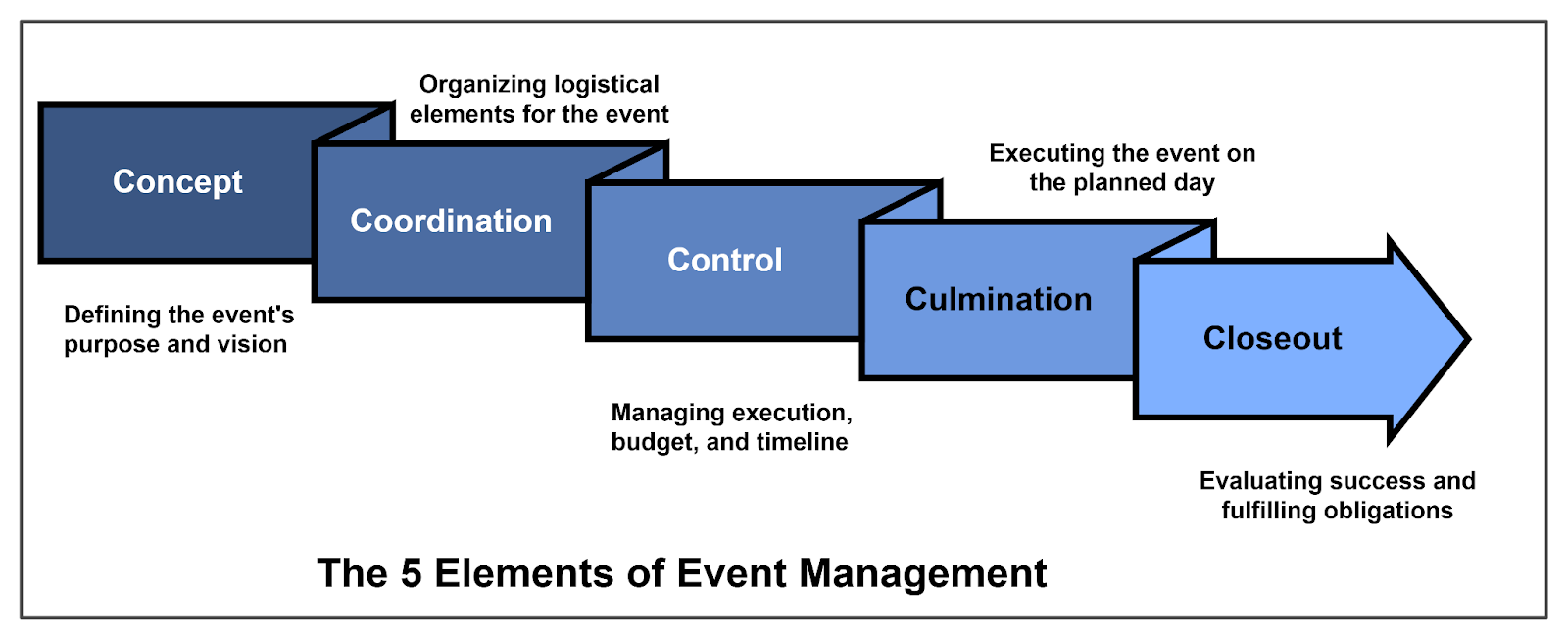
These elements are:
-
Concept
This is the initial idea or theme of the event. It defines the purpose and vision, guiding all subsequent planning decisions. A well-defined concept helps ensure that every aspect of the event aligns with its goals and resonates with the target audience.
-
Coordination
This involves organizing all logistical elements required for the event, such as venue selection, catering, transportation, and staffing. Effective coordination ensures that all moving parts work together seamlessly to create a smooth experience for attendees.
-
Control
This element focuses on managing the event’s execution, including budget adherence, risk management, and timeline maintenance. Control is crucial for addressing any unforeseen issues that may arise during the event, ensuring that everything stays on track.
-
Culmination
This refers to the actual day of the event when all planning comes to fruition. It involves executing the event according to the established plan while monitoring all activities to ensure they align with the intended goals.
-
Closeout
After the event concludes, this phase involves evaluating its success through feedback collection and data analysis. Closeout helps identify areas for improvement and ensures that all contractual obligations are fulfilled, paving the way for future events.
How many types of events are there in event management?
Corporate Events
Description: Event management companies strategically plan, design, and execute comprehensive corporate gatherings that align with organizational objectives, enhance brand visibility, foster team connectivity, and create impactful professional experiences that drive business communication and engagement.
Examples:
- Annual shareholders’ conference
- Product launch for a new smartphone
- Technology industry trade show
- Company’s 25th-anniversary celebration
- National sales team meeting
Wedding and Social Celebrations
Description: Event management professionals meticulously craft, coordinate, and deliver personalized wedding and social celebration experiences that seamlessly blend cultural traditions, emotional narratives, and sophisticated design elements to create memorable, once-in-a-lifetime moments for clients and their guests.
Examples:
- Destination wedding in Udaipur
- Traditional South Indian wedding ceremony
- Lavish engagement party in Mumbai
- Grand 50th wedding anniversary celebration
- Royal Rajasthani-themed wedding reception
Cultural and Entertainment Events
Description: Event management teams conceptualize, produce, and orchestrate dynamic cultural and entertainment experiences that showcase artistic expressions, curate audience engagement, manage complex logistics, and create immersive platforms for performers and attendees alike.
Examples:
- Jaipur Literature Festival
- International classical music concert
- National dance competition
- Bollywood award ceremony
- Contemporary art exhibition
Educational and Academic Events
Description: Event management professionals design, coordinate, and execute sophisticated academic gatherings that facilitate knowledge exchange, support intellectual discourse, manage complex multi-stakeholder interactions, and create structured environments for learning and professional networking.
Examples:
- National research symposium
- Inter-university science conference
- Annual technical education summit
- Academic award distribution ceremony
- Innovation and startup conclave
Sports and Adventure Events
Description: Event management teams strategically plan, coordinate, and deliver dynamic sports and adventure events that manage competitive logistics, ensure participant safety, create engaging spectator experiences, and elevate the overall athletic and recreational ecosystem.
Examples:
- Premier League cricket tournament
- Marathon running event
- National sports awards
- Adventure sports festival
- Corporate cricket championship
Government and Public Sector Events
Description: Event management professionals design, coordinate, and execute high-stakes governmental and public sector events that require precise protocol management, complex logistical coordination, diplomatic sensitivity, and seamless execution of official ceremonies and conferences.
Examples:
- Republic Day parade organization
- International diplomatic summit
- National innovation awards
- Public welfare campaign launch
- State-level government conference
Hospitality and Tourism Events
Description: Event management teams strategically conceptualize, produce, and manage promotional events that showcase destination experiences, facilitate industry networking, highlight tourism potential, and create immersive marketing platforms for hospitality and travel sectors.
Examples:
- International travel expo
- Luxury resort launch
- Tourism ministry conference
- Regional cultural tourism festival
- Hospitality industry networking event
Charitable and Social Impact Events
Description: Event management professionals design, coordinate, and execute purpose-driven events that amplify social messages, facilitate fundraising, create awareness, manage complex stakeholder interactions, and generate meaningful community engagement for critical social causes.
Examples:
- Fundraising gala for children’s education
- Healthcare awareness campaign
- Environmental sustainability summit
- NGO annual conference
- Charity marathon event
What is the aim of event management?
The aim of event management is to ensure the successful planning, execution, and evaluation of events, creating memorable experiences that meet the needs of clients and attendees.
Here are the primary objectives:
- Smooth Execution: The foremost aim is to ensure that events run without problems or delays, managing all logistical aspects effectively to create a seamless experience for participants.
- Client Satisfaction: Event management focuses on delivering an experience that aligns with the client’s vision and goals. This includes understanding client requirements and tailoring the event to meet those expectations.
- Cost-Effectiveness: Managing budgets efficiently is crucial. The aim is to provide a high-quality experience while minimizing costs, ensuring that the event remains financially viable.
- Stakeholder Engagement: Events are designed to engage various stakeholders, including attendees, sponsors, and partners. Effective event management aims to foster relationships and enhance communication among these groups.
- Measurable Outcomes: Establishing clear goals and objectives allows for the assessment of an event’s success through metrics such as attendance, engagement, and return on investment (ROI). This evaluation helps in refining future events.
The overarching aim of event management is to create impactful experiences that fulfill both organizational objectives and attendee expectations while maintaining operational efficiency and financial accountability.
What services do event management companies provide?
Event management companies offer a wide range of services to help clients plan and execute successful events.
Here are some of the most common services they provide:
-
Event Planning and Conceptualization
- Developing the event’s theme and objectives.
- Creating a detailed plan that outlines all aspects of the event.
-
Budget Management
- Establishing and managing the event budget.
- Ensuring cost-effectiveness while meeting client expectations.
-
Logistics Coordination
- Handling venue selection and booking.
- Managing transportation, catering, audiovisual needs, and other logistical elements.
-
Vendor Management
- Sourcing and coordinating with various vendors, such as caterers, decorators, and technical support teams.
- Negotiating contracts and ensuring vendor compliance with event requirements.
-
On-Site Management
- Overseeing the event on the day to ensure everything runs smoothly.
- Managing staff, troubleshooting issues, and coordinating activities.
-
Marketing and Promotion
- Promoting the event through various channels to maximize attendance.
- Developing marketing materials and managing social media campaigns.
-
Post-Event Evaluation
- Gathering feedback from attendees and stakeholders.
- Analyzing event performance against objectives to inform future planning.
-
Specialized Services
- Offering unique services such as virtual or hybrid event management, environmental sustainability planning, and custom event design.
- Providing technical support for audiovisual needs and interactive experiences.
At S&IB, we specialize in delivering end-to-end event management solutions, combining creativity, precision, and expertise to bring your vision to life and ensure every event is flawlessly executed.
What are the benefits of event management?
Event management offers numerous benefits that enhance the overall experience for both organizers and attendees. Here are some key advantages:
-
Efficient Resource Utilization
Event management ensures optimal use of resources, including time, budget, and personnel. By creating a detailed plan and adhering to it, event managers can avoid overspending and minimize waste, leading to cost savings for clients.
-
Improved Guest Experience
A well-managed event prioritizes the needs and preferences of attendees, resulting in a more enjoyable and memorable experience. This includes thoughtful consideration of venue selection, catering quality, and entertainment options.
-
Risk Management
Effective event management involves identifying potential risks and developing contingency plans to mitigate them. This proactive approach helps address issues such as technical difficulties or security concerns, ensuring that the event runs smoothly.
-
Professionalism and Expertise
Event management companies bring specialized knowledge and experience to the table, which enhances the credibility of the event. Their expertise helps in executing complex logistics and managing various aspects of the event effectively.
-
Networking Opportunities
Events often serve as platforms for networking among participants. Skilled event management facilitates connections between attendees, fostering professional relationships that can lead to future collaborations.
-
Enhanced Brand Image
A successful event can significantly boost the reputation of an individual or organization. Well-executed events create positive impressions that enhance brand awareness and loyalty among attendees.
-
Measurable Success
Post-event evaluations are integral to the event management process, allowing organizers to gather feedback and assess the event’s success against its objectives. This data-driven approach helps identify areas for improvement in future events.
-
Stress Reduction
By outsourcing event planning to professionals, organizers can alleviate stress associated with managing logistics, legalities, and on-site coordination, allowing them to focus on their core responsibilities.
In summary, effective event management not only ensures smooth execution but also enhances attendee satisfaction and achieves organizational goals through meticulous planning and execution.