
- December 1, 2024
- Posted by: sibservices
- Category:
What is Fire Safety?
Fire safety refers to the set of practices, procedures, and measures taken to prevent fires, minimize the risk of fire-related accidents, and ensure the safety of individuals and property in the event of a fire.
What is the importance of Fire Safety?
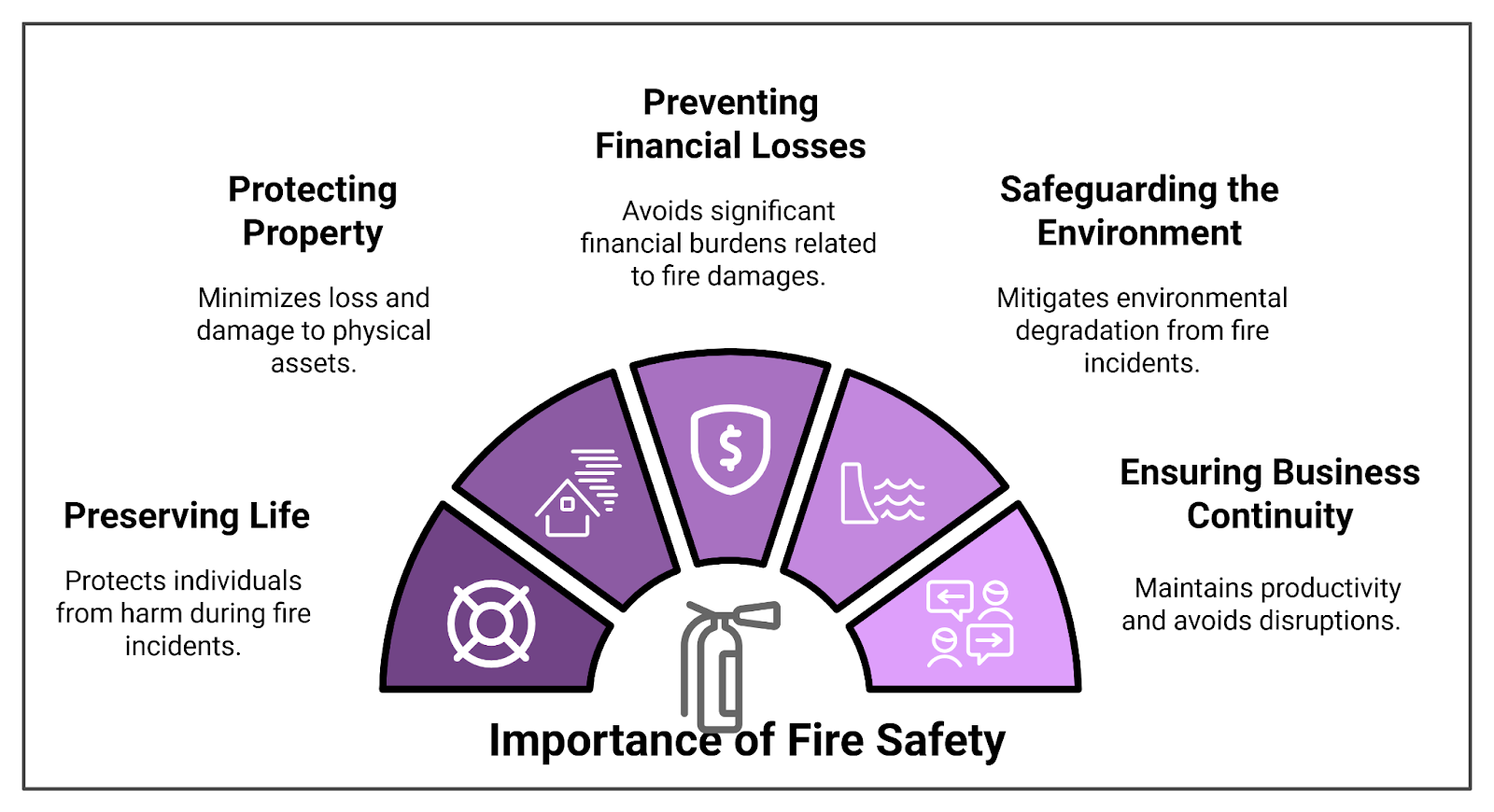
Implementing fire safety measures is essential for several reasons:
- Preserving Life: Effective fire safety protocols protect individuals from harm during a fire incident.
- Protecting Property: Adhering to fire safety guidelines minimizes property loss and damage.
- Preventing Financial Losses: By reducing the risk of fire-related damages, businesses can avoid significant financial burdens related to repairs and insurance claims.
- Safeguarding the Environment: Fire incidents can lead to environmental degradation; thus, proper fire management helps mitigate such impacts.
- Ensuring Business Continuity: A well-prepared workplace can maintain productivity and avoid costly disruptions due to fire incidents.
- Complying with Regulations: Many jurisdictions enforce specific fire safety codes that must be followed to ensure legal compliance.
At SIB, we provide comprehensive fire safety services to protect your property and the safety of individuals in any environment.
What are the key components of Fire safety?
Effective fire safety involves several critical components:
- Risk Assessment: Regular evaluations help identify potential hazards and implement necessary precautions.
- Fire Prevention Strategies: These include controlling sources of ignition, maintaining safe distances between flammable materials, and ensuring proper storage of hazardous substances.
- Emergency Planning: Developing clear evacuation plans and conducting regular drills ensure that individuals know how to respond in case of a fire emergency.
- Training and Education: Providing training on the use of fire extinguishers, emergency procedures, and first aid can significantly improve response times during emergencies.
What are 5 fire safety rules?
Here are five essential fire safety rules that can help prevent fires and ensure safety in case of an emergency:
1. Install Smoke Alarms
Smoke alarms are crucial for early fire detection. They should be installed on every level of a home, including inside bedrooms and outside sleeping areas.
Regular testing and battery replacement are necessary to ensure functionality, as these alarms provide vital minutes for evacuation during a fire.
2. Create and Practice a Fire Escape Plan
Develop a comprehensive fire escape plan that includes multiple exit routes from each room.
Ensure that all household members are familiar with the plan and practice it at least twice a year. Designate a safe meeting point outside the home to account for everyone after evacuation.
3. Keep Flammable Materials Safe
Store flammable materials away from heat sources, and handle items like candles and matches with care. Use approved containers for storage and ensure that cooking areas remain clear of combustibles. This reduces the risk of accidental ignition.
4. Use Fire Extinguishers Properly
Have fire extinguishers readily available in key areas, such as the kitchen and garage. Familiarize yourself with their operation using the PASS method (Pull, Aim, Squeeze, Sweep).
Regularly check extinguishers to ensure they are in working order and suitable for potential fire types.
5. Stay Low on Smoke
If you encounter smoke while escaping, stay low to the ground where the air is clearer. Crawl on your hands and knees to avoid inhaling harmful smoke particles, which can be deadly in a fire situation.
Implementing these rules can significantly enhance fire safety in homes and workplaces, potentially saving lives during emergencies.
What is the difference between fire protection and fire safety?
Fire safety covers a range of strategies aimed at preventing and managing fire-related incidents. Within this domain, fire protection and fire prevention represent two distinct yet complementary approaches.
Fire Prevention
Fire prevention refers to proactive measures designed to stop fires from occurring in the first place. This involves identifying potential fire hazards and implementing strategies to eliminate or control them. Key aspects of fire prevention include:
- Education and Awareness: Training individuals on fire safety practices.
- Regular Inspections: Conducting routine checks on electrical systems and heating equipment to ensure safety.
- Safe Storage Practices: Properly storing flammable materials to minimize risk.
- Building Design: Utilizing fire-resistant materials and implementing compartmentalization techniques to limit fire spread.
The goal of fire prevention is to create an environment where the likelihood of a fire starting is significantly reduced.
Fire Protection
In contrast, fire protection focuses on measures taken after a fire has started. Its primary aim is to mitigate the damage caused by fires and ensure the safety of occupants. Fire protection strategies include:
- Active Systems: These are systems that actively engage during a fire, such as sprinklers, smoke detectors, and alarms that alert occupants and help control the fire.
- Passive Systems: Structural elements designed to contain fires, such as fire doors, walls, and barriers that prevent the spread of flames and smoke.
Fire protection systems are often integrated into building designs to enhance safety and minimize potential damage during a fire incident.
Key Differences
| Aspect | Fire Prevention | Fire Protection |
| Focus | Preventing fires from starting | Minimizing damage during a fire |
| Approach | Proactive (before a fire occurs) | Reactive (during a fire incident) |
| Examples | Education, inspections, safe storage | Alarms, sprinklers, fire-resistant materials |
Both fire prevention and fire protection are essential components of a comprehensive fire safety strategy. While prevention aims to reduce the risk of fires, protection ensures that if a fire does occur, its impact is minimized, thereby safeguarding lives and property.