
- November 30, 2024
- Posted by: sibservices
- Category:
What is Waste Management?
Waste management refers to the systematic approach to managing waste materials, which includes collection, transportation, treatment, recycling, and disposal. The primary goals are to minimize waste generation, ensure safe disposal, and recover valuable resources from waste.
What are the 4 types of waste management?
The four major types of waste management are essential for effectively handling waste materials while minimizing environmental impact.
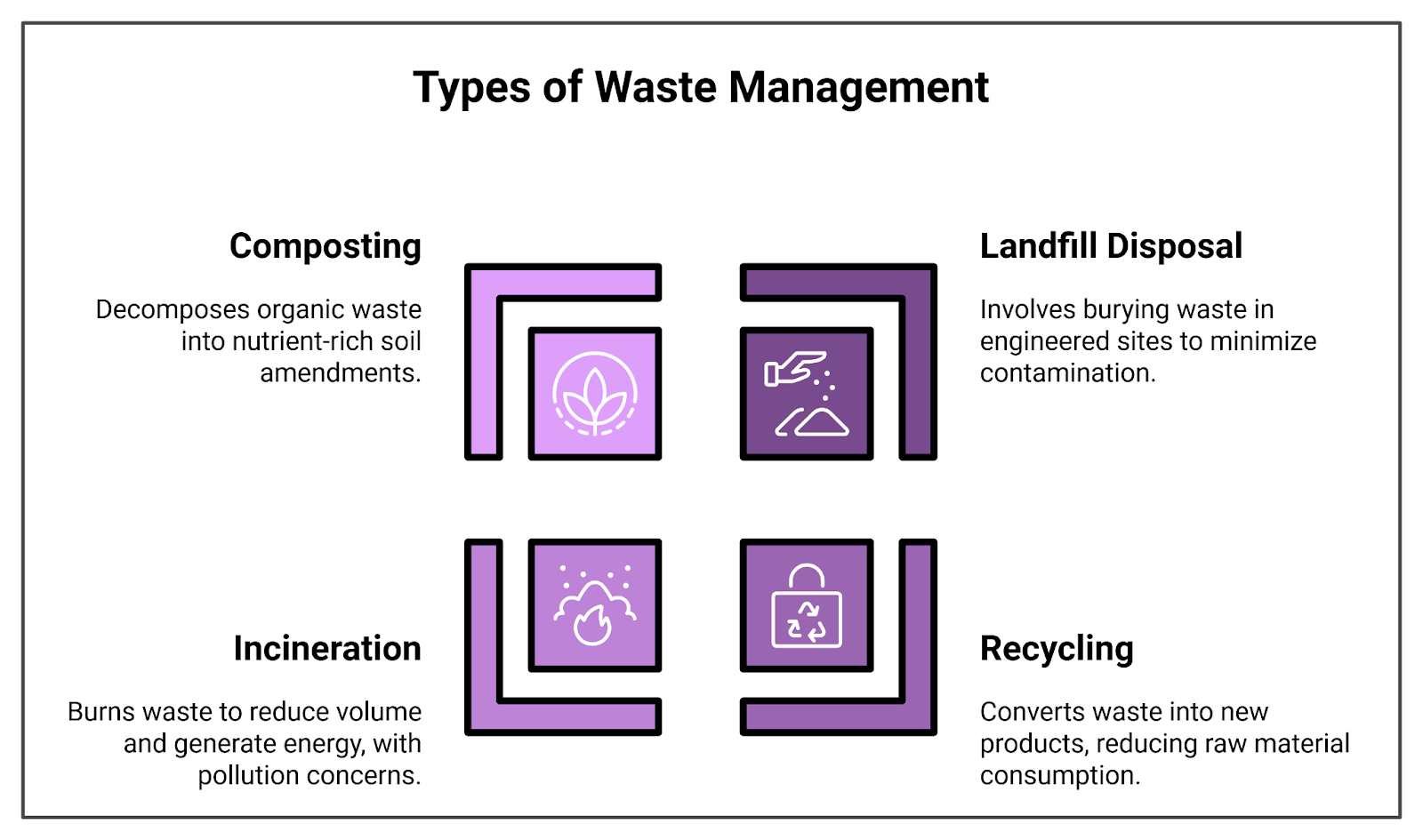
Each method has its unique processes and benefits:
1. Landfill Disposal
Landfilling is the most common method for disposing of solid waste. It involves burying waste in designated areas, which are engineered to minimize environmental contamination.
While landfills can effectively manage large volumes of waste, they pose risks such as groundwater pollution and greenhouse gas emissions from decomposing materials.
2. Recycling
Recycling involves converting waste materials into new products, thereby reducing the consumption of raw materials and energy. This process typically includes the collection, sorting, processing, and manufacturing of recycled goods.
Commonly recycled materials include paper, glass, plastics, and metals. Recycling helps divert waste from landfills, conserves natural resources, and reduces pollution.
3. Incineration
Incineration is the process of burning waste at high temperatures to reduce its volume and generate energy. This method is often used for municipal solid waste and hazardous materials.
While incineration significantly decreases waste mass and can produce electricity or heat, it raises concerns about air pollution and the release of toxic substances.
4. Composting
Composting is the biological decomposition of organic waste, such as food scraps and yard debris, into nutrient-rich soil amendments. This process not only reduces the amount of waste sent to landfills but also enriches soil for gardening and agriculture.
Composting can be done through various methods, including cold and hot composting techniques.
S&IB provides comprehensive waste management services, helping to effectively handle waste through eco-friendly and efficient solutions that promote sustainability, regulatory compliance, and operational efficiency.
What are the types of Waste?
Waste can be categorized into several types based on its characteristics and sources. Here are the main types of waste:
1. Solid Waste
This includes garbage and refuse that is discarded by households, industries, and businesses. It encompasses various subcategories such as:
- Municipal Solid Waste: Everyday items discarded from homes and businesses.
- Construction and Demolition Waste: Debris from construction sites, including concrete and wood.
- Bulky Waste: Large items like furniture or appliances.
2. Liquid Waste
Liquid waste consists of any waste in liquid form, which can include:
- Wastewater: Water that has been used in homes or industries, often containing contaminants.
- Chemical Waste: Liquids from industrial processes that may be hazardous.
3. Organic Waste
This type of waste is biodegradable and comes from natural sources, including:
- Food Waste: Leftover food and kitchen scraps.
- Garden Waste: Plant materials like leaves, grass clippings, and branches.
4. Hazardous Waste
Hazardous waste poses a risk to health or the environment and includes:
- Chemical Waste: Toxic substances from industrial processes.
- Biomedical Waste: Waste generated from healthcare facilities, including sharps and contaminated materials.
5. E-Waste
E-waste refers to discarded electronic devices such as computers, phones, and appliances. This type of waste often contains hazardous materials that require special handling.
What are the 4 Rs of Waste Management?
The 4 Rs of waste management are fundamental principles aimed at promoting sustainable practices and minimizing environmental impact.
They include:
1. Reduce
Minimize waste generation by using fewer resources. Choose products with less packaging and opt for durable items over disposables.
2. Reuse
Find new uses for items instead of discarding them. This can include repurposing materials or donating unused goods.
3. Recycle
Convert waste materials into new products to conserve resources and reduce pollution. Commonly recycled items include paper, plastics, and metals.
4. Recover
Extract useful energy or materials from waste that cannot be reduced, reused, or recycled, often through processes like incineration or anaerobic digestion.
Together, these principles provide a comprehensive framework for managing waste effectively and sustainably, encouraging practices that benefit both the environment and society.
What is the importance of waste management?
Environmental Protection
Effective waste management reduces pollution in air, water, and soil, protecting ecosystems and human health.
Resource Conservation
By promoting recycling and reuse, waste management conserves natural resources and reduces the need for raw material extraction.
Public Health
Proper disposal of waste minimizes health risks associated with hazardous materials, preventing disease transmission and contamination.
Economic Benefits
The waste management sector creates jobs and reduces cleanup costs, contributing to local economic growth.
Aesthetic Improvement
Clean environments enhance community pride and attract tourism, improving the overall quality of life.
Compliance with Regulations
Adhering to waste management regulations prevents legal issues and fosters environmental responsibility.
Sustainable Development
Integrating effective waste management supports long-term ecological balance and sustainability goals for future generations.
How does the waste management hierarchy help in promoting sustainable waste management practices?
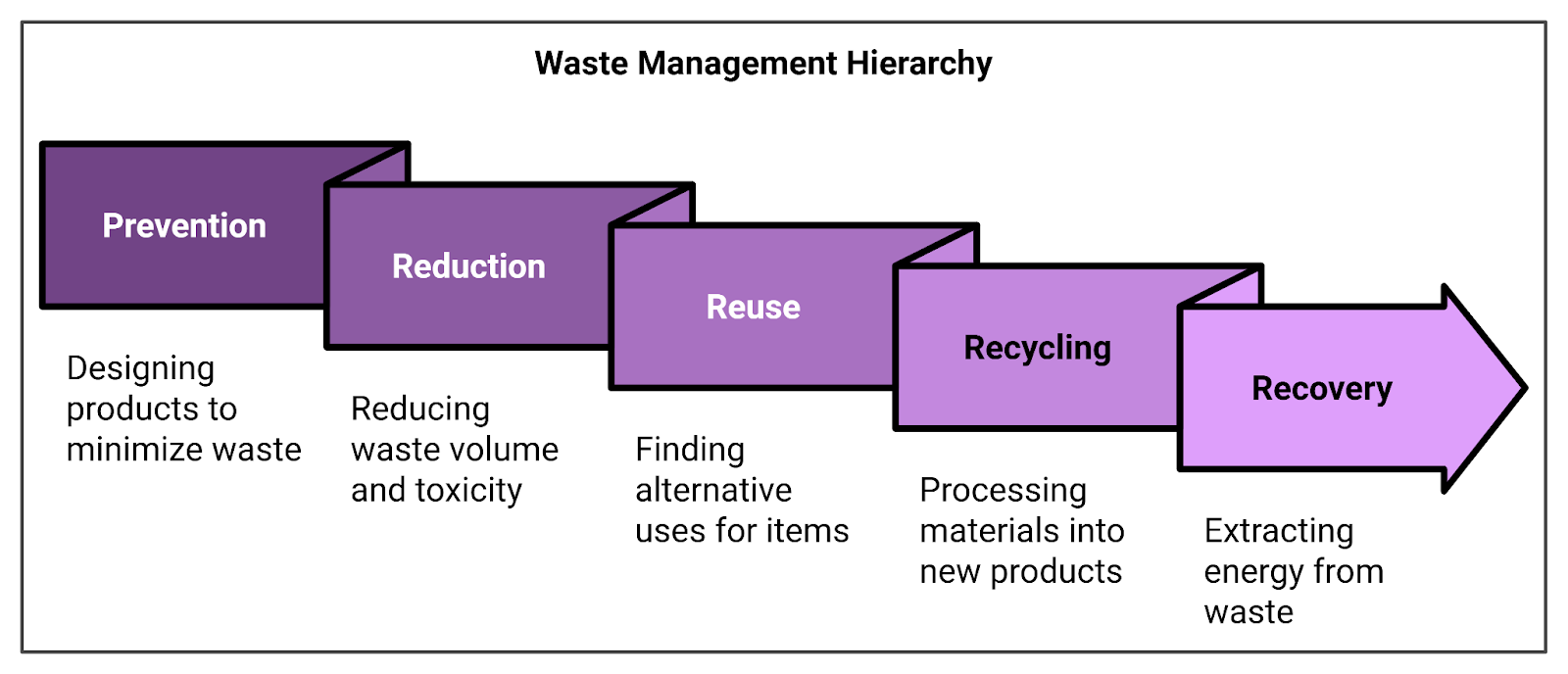
The waste management hierarchy is a framework that prioritizes waste management strategies based on their environmental benefits. It is typically represented as an inverted pyramid, illustrating the most preferred actions at the top and the least preferred at the bottom.
Here are the key levels of the hierarchy:
- Prevention: The most effective strategy is to prevent waste generation altogether. This involves designing products and processes to minimize waste and use fewer resources. Actions include avoiding unnecessary materials and choosing products with minimal packaging.
- Reduction: If waste cannot be avoided, the next step is to reduce its volume and toxicity. This can be achieved by using fewer materials in manufacturing and promoting efficient consumption.
- Reuse: This stage encourages finding alternative uses for items before they become waste. Reusing products extends their life cycle and reduces the need for new materials. Examples include donating or repurposing items instead of discarding them.
- Recycling: Recycling involves processing materials to create new products, thus conserving resources and reducing landfill use. This stage helps close the loop in product life cycles by turning waste into valuable resources.
- Recovery: When recycling is not feasible, energy recovery methods, such as incineration or anaerobic digestion, can be employed to extract energy from waste materials.
- Disposal: The least preferred option is disposal, which includes landfilling or incinerating waste without energy recovery. This method should only be used when no other options are viable, as it has significant environmental impacts.
Why Do Companies Need Waste Management Services?
Engaging waste management services is essential for businesses to efficiently handle waste while minimizing environmental impact. Here are the key reasons:
1. Cost Savings
Professional waste management can streamline processes, reducing disposal costs and potentially saving money through bulk service discounts and efficient recycling practices.
2. Regulatory Compliance
Waste management companies help businesses comply with local, state, and federal regulations regarding waste disposal, thereby avoiding legal issues and penalties.
3. Expertise and Efficiency
These services bring specialized knowledge and resources to manage various types of waste effectively, ensuring safe disposal and minimizing health risks associated with hazardous materials.
4. Environmental Protection
By utilizing professional services, companies can implement sustainable practices that reduce landfill waste and promote recycling, contributing to overall environmental health.
5. Improved Operational Efficiency
Outsourcing waste management allows employees to focus on their core tasks rather than handling waste, leading to a more productive work environment.
6. Enhanced Brand Image
Demonstrating a commitment to responsible waste management can improve a company’s reputation and attract environmentally-conscious customers.
In summary, partnering with waste management service providers enables companies to manage their waste responsibly while benefiting economically, legally, and environmentally.